Why Feeding Hay Can Improve Soil Health
Jun 05, 2026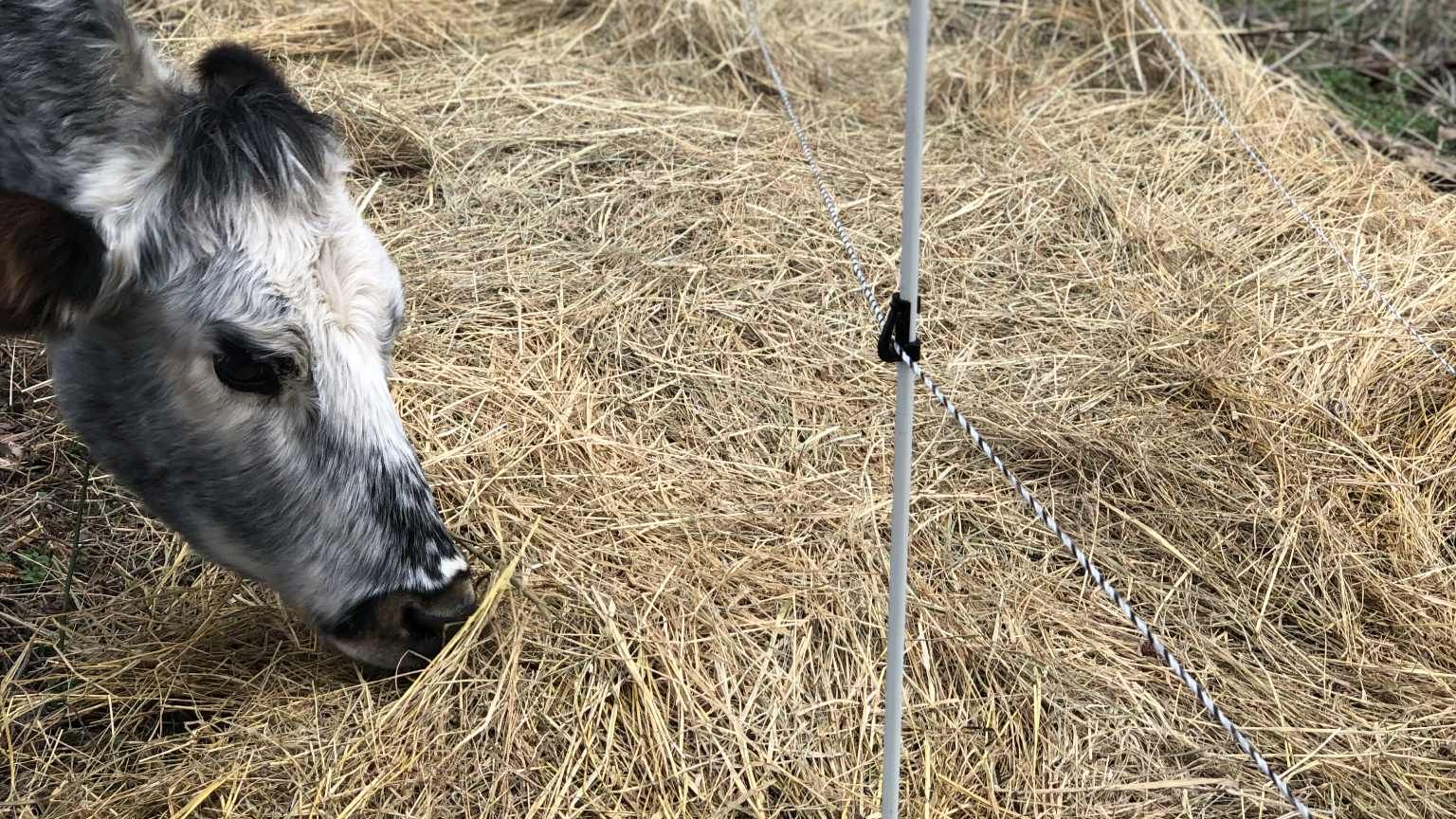
Why Feeding Hay Can Improve Soil Health
Many graziers assume feeding hay is a necessary evil. The common belief is that every hay bale fed is a sign that something went wrong.
But in many grazing systems, strategically feeding hay can actually improve soil health and pasture productivity.
We're currently experiencing one of the longest dry periods we've had in years. Aside from a few rain events, we've gone nearly ten months without consistent moisture. Pastures across the area are struggling.
Yet one of the most noticeable things on our farm is this:
The areas where we fed hay this past winter are growing some of the best grass on the farm.
Hay Creates a Moisture-Holding Layer
If you walk into one of our hay feeding areas and dig beneath the remaining hay residue, you'll still find moisture in the soil.
That's important.
Moisture is not just water. Moisture creates an environment where soil life can thrive.
Under the hay residue you'll find:
-
Earthworms
-
Insects
-
Fungi
-
Bacteria
-
Other soil organisms
These organisms are constantly breaking down plant material and turning it into organic matter.
The hay acts like a protective blanket over the soil surface. It reduces evaporation, moderates temperature, and creates conditions where soil biology can continue working even during dry periods.
Hay Becomes Future Soil
A hay bale is not just livestock feed.
A significant portion of every bale eventually becomes organic matter.
As cattle pull hay apart, trample it into the soil, and leave behind residue, that material begins to break down.
Over time, the carbon from the hay becomes part of the soil itself.
This process improves:
-
Water infiltration
-
Water holding capacity
-
Soil structure
-
Biological activity
The result is often healthier and more resilient pastures.
Hay Feeding Can Prevent Overgrazing
One benefit that doesn't get enough attention is that hay feeding can help protect pasture plants.
During droughts or slow growth periods, continuing to graze short grass can weaken plants and reduce recovery.
Providing hay gives pastures additional recovery time.
However, this only works if hay feeding is managed correctly.
You cannot simply place a bale in the middle of a pasture and allow cattle to continuously graze the surrounding grass.
Instead, use temporary fencing or paddocks to concentrate cattle around the hay feeding area.
Then move them.
Depending on conditions, that move may happen in a few days, a week, or even a month.
Hay feeding still requires management.
Concentrated Animal Impact Improves Soil
Another major advantage of hay feeding is animal impact.
When cattle are concentrated around hay:
-
Hooves disturb the soil surface
-
Manure is deposited at higher rates
-
Urine is concentrated in the area
-
Plant residue is incorporated into the soil
Many graziers spend money trying to add fertility to a pasture.
Cattle naturally provide much of that fertility when managed correctly.
The combination of manure, urine, trampled hay, and hoof impact creates conditions that can improve soil health for years after the feeding event.
The Goal Is Not Feeding More Hay
This is not an argument for feeding hay unnecessarily.
The goal is still to grow as much grazing as possible.
However, when hay feeding is required, it can be viewed as an investment rather than a loss.
When managed properly, hay feeding can:
-
Build organic matter
-
Improve water retention
-
Support soil biology
-
Increase fertility
-
Reduce overgrazing
-
Improve future pasture production
Sometimes the best grass on the farm is growing exactly where the hay bale used to be.
Join the mailing list
We hate SPAM. We will never sell your information, for any reason.